1. Overview & Physics
Percolation Mechanics
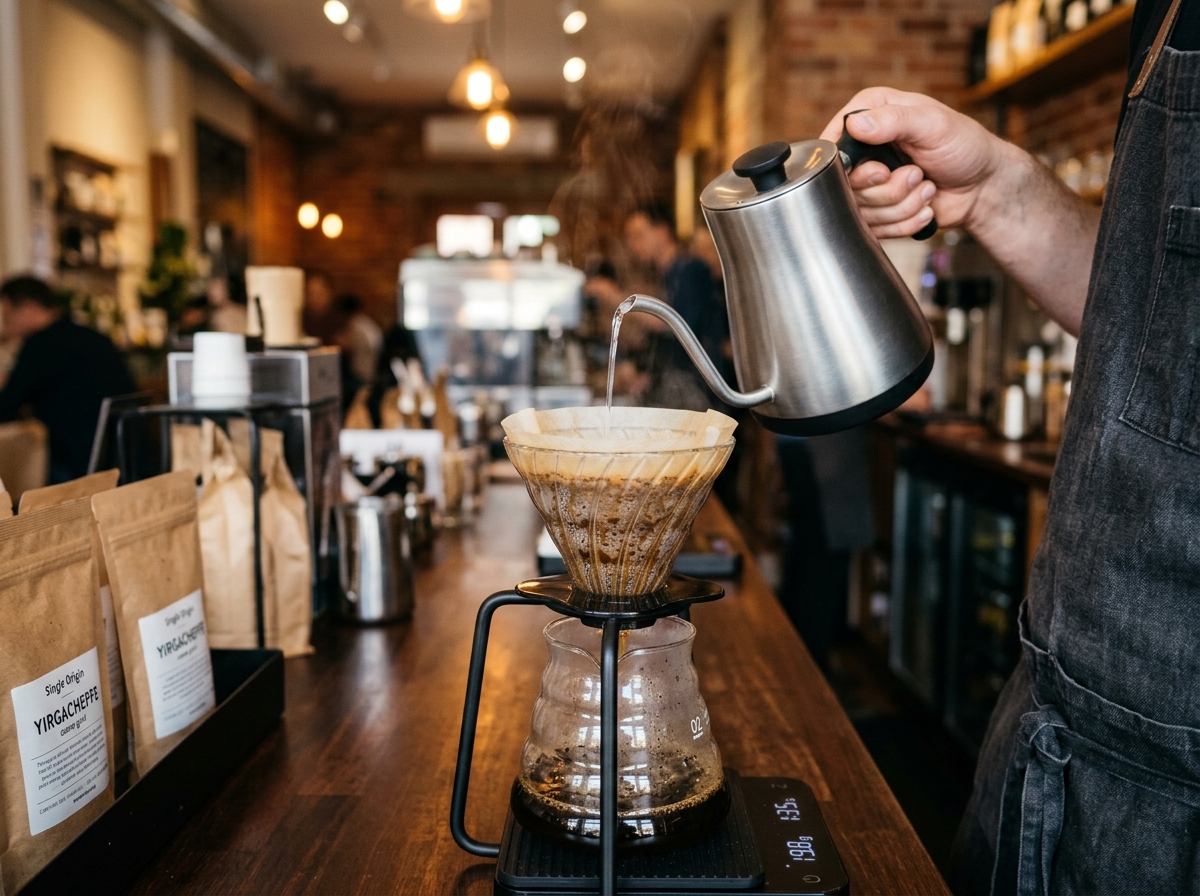
In pour-over brewing, water flow is governed by gravity and boundary layers. The classic V60 uses spiral ribs to keep the paper filter elevated, allowing water to escape laterally. This accelerates flow rates. The Hario Mugen, conversely, features flat ribs, forcing the paper to seal against the wall. Water must pass completely down through the coffee column, increasing contact yield.
Dripper Selection Rule
Use the V60 for multi-pour agitation techniques to highlight acidity, and the Mugen for single-pour recipes to build rich body.
2. Practical Calibrations
Managing this requires measuring indicators in real time. Adjust grind size, water dynamics, and flow parameters incrementally. Change only one variable at a time to ensure clean results and isolate target parameters.
Barista Action Checklist
- Weigh dry grounds dry dose exactly to 0.1g.
- Calibrate water temperature using PID sensors.
- Target correct brew ratios (e.g. 1:15 for filter, 1:2 for espresso).
- Swirl or stir to ensure even saturation during extraction.
- Record extraction time and evaluate flavor notes subjectively.
Frequently Asked Questions
What is lateral bypass in pour over?
Bypass is water flowing directly down the paper filter wall into the server without passing through the coffee bed, diluting the extraction.
Why does the Hario Mugen draw down slower?
The Mugen has flat walls and no spiral ribs. The paper filter sticks flat to the dripper, eliminating bypass and slowing the flow rate.