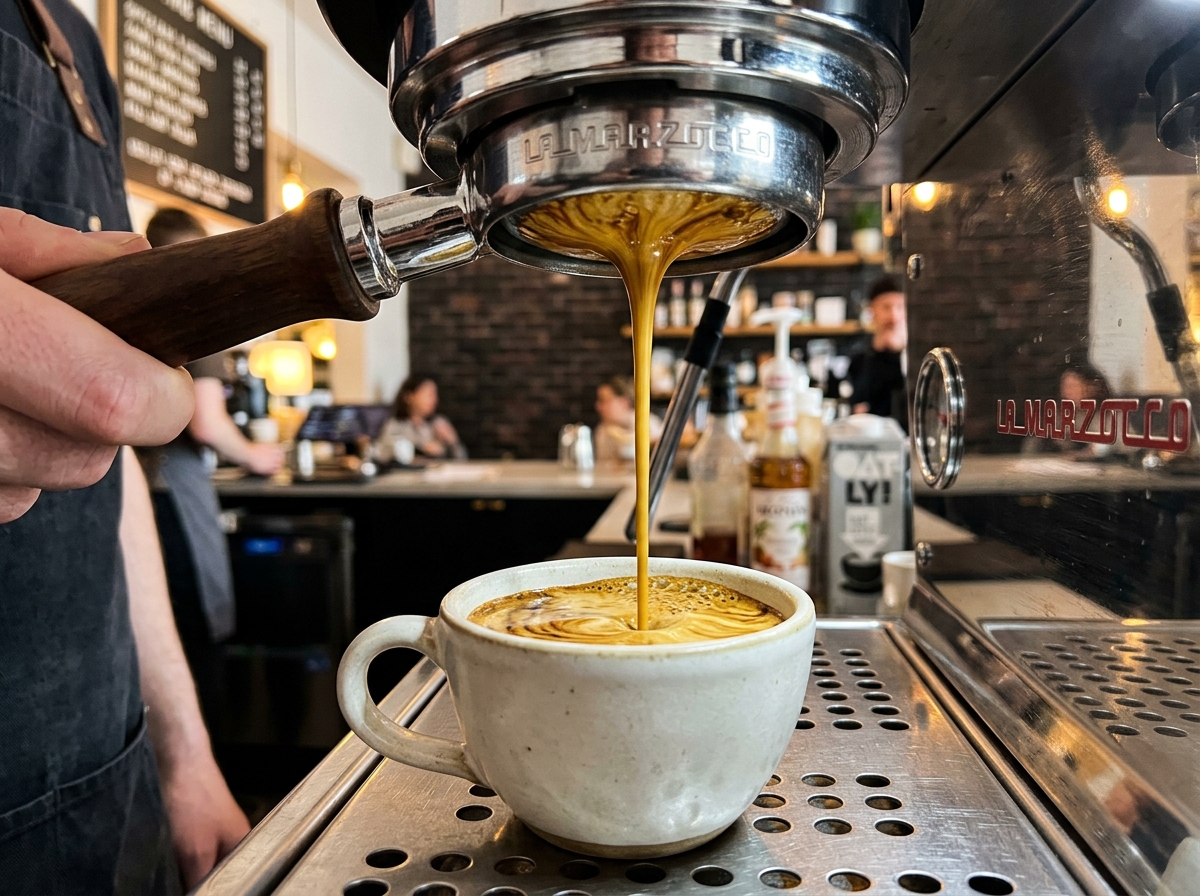
1. Overview & Physics
The Physics of Channeling
Espresso extraction operates under 9 bars of pressure. According to fluid dynamics, water will always follow the path of least resistance. If your coffee bed contains minor cracks, uneven density spots, or loose edges, the water bypasses the surrounding grounds. This concentrates high-temperature flow in a small channel, causing rapid over-extraction (bitterness) in that channel, while leaving the rest of the puck under-extracted (sourness).
Key Concept: Puck Permeability
Uniform puck density is critical. Use a WDT (Weiss Distribution Technique) tool to break up micro-clumps and level the bed before tamping to ensure identical water resistance across the basket.
2. Practical Calibrations
Managing this requires measuring indicators in real time. Adjust grind size, water dynamics, and flow parameters incrementally. Change only one variable at a time to ensure clean results and isolate target parameters.
Barista Action Checklist
- Weigh dry grounds dry dose exactly to 0.1g.
- Calibrate water temperature using PID sensors.
- Target correct brew ratios (e.g. 1:15 for filter, 1:2 for espresso).
- Swirl or stir to ensure even saturation during extraction.
- Record extraction time and evaluate flavor notes subjectively.
Frequently Asked Questions
What causes espresso channeling?
Channeling is caused by water finding paths of least resistance through the coffee puck. This is driven by uneven tamping, poor distribution, or incorrect grind sizing.
How do I fix edge channeling?
Edge channeling occurs when the coffee puck shrinks away from the basket rim. Ensure your tamper fits your basket tightly and distribute grounds evenly to the edges using a WDT tool.