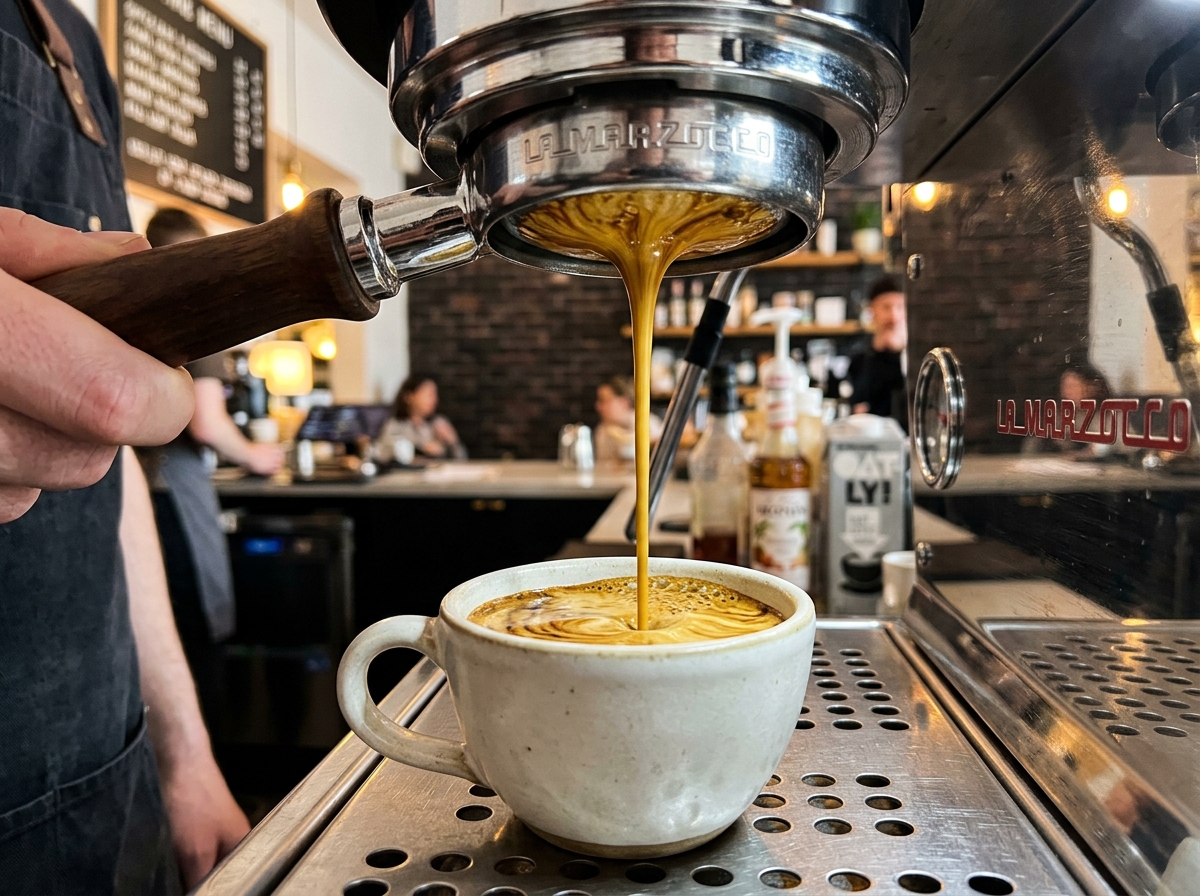
1. Overview & Physics
Feedback Loop Control
Traditional thermostats wait for boiler temperature to drop before turning on, causing wild thermal waves. A PID (Proportional-Integral-Derivative) controller uses calculus to predict heating needs. By calculating the error between current and target temperature, the controller pulses current to the heating element in fractions of a second, stabilizing water temperature within 0.1째C.
The PID Advantage
A stable PID loop guarantees that your extraction temperature remains constant from the first second of pre-infusion to the final drip.
2. Practical Calibrations
Managing this requires measuring indicators in real time. Adjust grind size, water dynamics, and flow parameters incrementally. Change only one variable at a time to ensure clean results and isolate target parameters.
Barista Action Checklist
- Weigh dry grounds dry dose exactly to 0.1g.
- Calibrate water temperature using PID sensors.
- Target correct brew ratios (e.g. 1:15 for filter, 1:2 for espresso).
- Swirl or stir to ensure even saturation during extraction.
- Record extraction time and evaluate flavor notes subjectively.
Frequently Asked Questions
What is a PID controller on an espresso machine?
A PID controller is an algorithm-based thermostat that micro-adjusts heating elements to maintain a highly stable boiler temperature.
Why is temperature stability important for espresso?
Small temperature fluctuations (even 1째C) alter the solubility rate of coffee compounds, causing inconsistent shots.