1. Overview & Physics
Vapor Pressure & Vacuum
Syphon brewing is a theatrical demonstration of gas laws. Heating water in the lower globe causes vaporization. The expanding gas pushes hot water up a siphon tube into the upper chamber where coffee is stirred. When the heat source is removed, the steam in the lower globe condenses, creating a powerful vacuum drawdown.
Drawdown Inspection
A fast drawdown indicates proper filter alignment, while a stalled flow suggest the grind size is too fine, creating high resistance.
2. Practical Calibrations
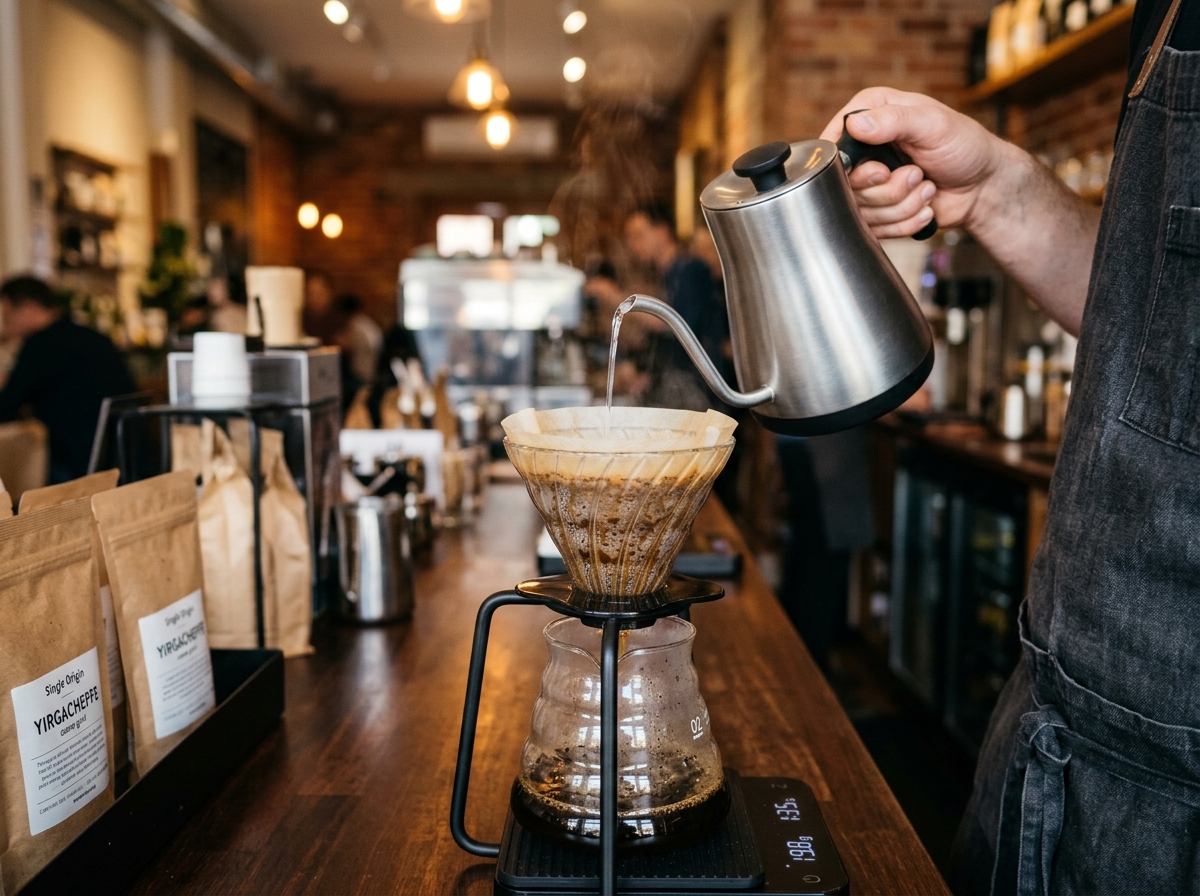
Managing this requires measuring indicators in real time. Adjust grind size, water dynamics, and flow parameters incrementally. Change only one variable at a time to ensure clean results and isolate target parameters.
Barista Action Checklist
- Weigh dry grounds dry dose exactly to 0.1g.
- Calibrate water temperature using PID sensors.
- Target correct brew ratios (e.g. 1:15 for filter, 1:2 for espresso).
- Swirl or stir to ensure even saturation during extraction.
- Record extraction time and evaluate flavor notes subjectively.
Frequently Asked Questions
How does a syphon coffee maker work?
Heating water in the bottom chamber generates steam pressure, pushing the water up to the top chamber. Removing heat creates a vacuum that pulls the brewed coffee back down.
What filter is used in a syphon?
A cloth filter tensioned by a spring is standard, yielding a clean cup with heavy body because it allows fine oils to pass.